Before you approach a Certification Body, you need two answers: which category your product falls in, and which kind of operator you are. The first decides which body can certify you at all. The second decides what the inspection looks like and what it costs.
The numbers that decide your route
- 9Categories NPOP accredits certification bodies in
- 25–500Farmers in a Grower Group (aquaculture: minimum 10)
- 50 kmMaximum radius across which group members' land may sit
- 4 haHolding at or above which a group member is inspected separately every year
The Nine Categories
Accreditation under NPOP may be sought for crop production; livestock, poultry and products; beekeeping and apiculture; aquaculture production; food processing and handling; animal feed processing and handling; mushroom production; seaweed, aquatic plants and greenhouse crop production; and any further categories approved under NPOP from time to time.
The NAB decides which of these a given Certification Body may operate in, based on its assessment of that body. A body accredited for crop production cannot certify your processing unit unless it also holds that category.
The Four Kinds of Operator
NPOP defines an operator as a producer, processor, trader or Grower Group who cultivates, processes, handles or trades organic products under the NPOP standards, registered under NPOP and certified by a Certification Body.
| You are | Route | What it means in practice |
|---|---|---|
| A single farm, at any size | Individual producer | Your farm is inspected and certified in its own right |
| Many small farms selling together | Grower Group | Certified as one entity through an Internal Control System, with sample inspection of members |
| A processing or packing unit | Processor / handler | Certified under food processing and handling; the unit, its ingredients and its records are inspected |
| Buying and selling certified produce | Trader | Certified for trade; every purchase and sale moves on transaction certificates |
control?"} -->|"One farm"| B["Individual producer"] A -->|"Many small farms"| C{"25 or more farmers,
within 50 km?"} A -->|"A unit that
processes or packs"| D["Processor / handler"] A -->|"Stock you buy
and resell"| E["Trader"] C -->|"Yes"| F["Grower Group
with an ICS"] C -->|"No"| B
Grower Group: the Rules That Decide Eligibility
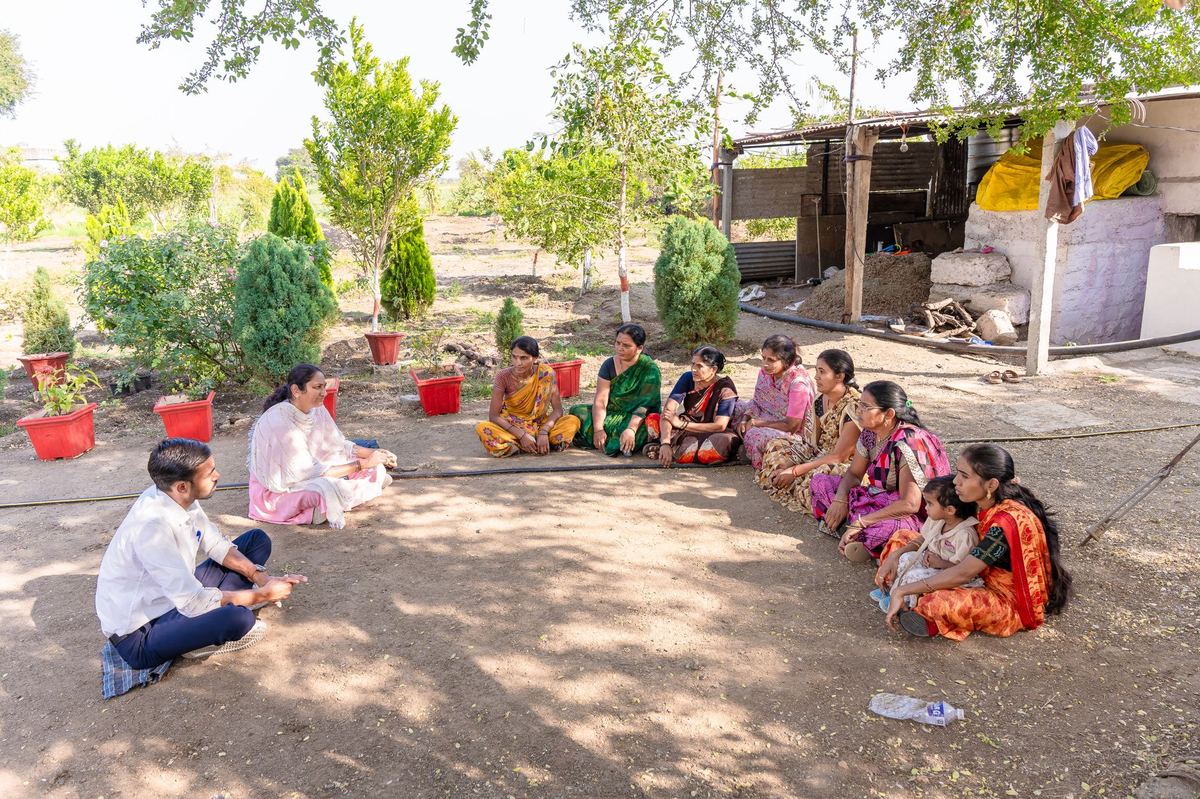
Grower group certification exists so that smallholders can reach an export market together. NPOP sets hard conditions on it:
- It must be a registered legal entity — a society registered under the Societies Registration Act 1860 or the relevant state Act, an FPO or Farmer Producer Company incorporated under the Companies Act 2013, or a co-operative society.
- Members must apply similar production systems.
- Land must be in geographical proximity — preferably the same village or adjacent villages of the same district or border districts, within a maximum radius of 50 km.
- The group markets its products as a single entity.
- Size: minimum 25 and maximum 500 farmers, except aquaculture, where the minimum is 10. NAB reviews these numbers from time to time based on a group's performance and compliance.
The rule most groups trip over: a member farm of 4 hectares (10 acres) or more can join a grower group, but must be inspected separately by the Certification Body every year — and the total area of such farms must stay below 50% of the group's total area. A group built around a few large holdings plus some smallholders can fail that test outright.
Most Exporters Need More Than One Route
These routes stack. A company that sources from a farmer group, processes the produce in its own unit and ships it abroad is looking at group certification for the farms, processing and handling certification for the unit, and trade certification for the sale — each inspected, each on Tracenet, each generating its own certificates.
Map that chain before you approach a Certification Body, because it determines the categories the body must hold. If your group is an FPO, the internal control work is covered in depth in FPO Internal Control System, and the land-record groundwork in land verification for group certification.
Next: how to choose an accredited Certification Body, and what the contract with them commits you to. KrushiFlow validates these fields and submits farmer records to the portal in bulk.