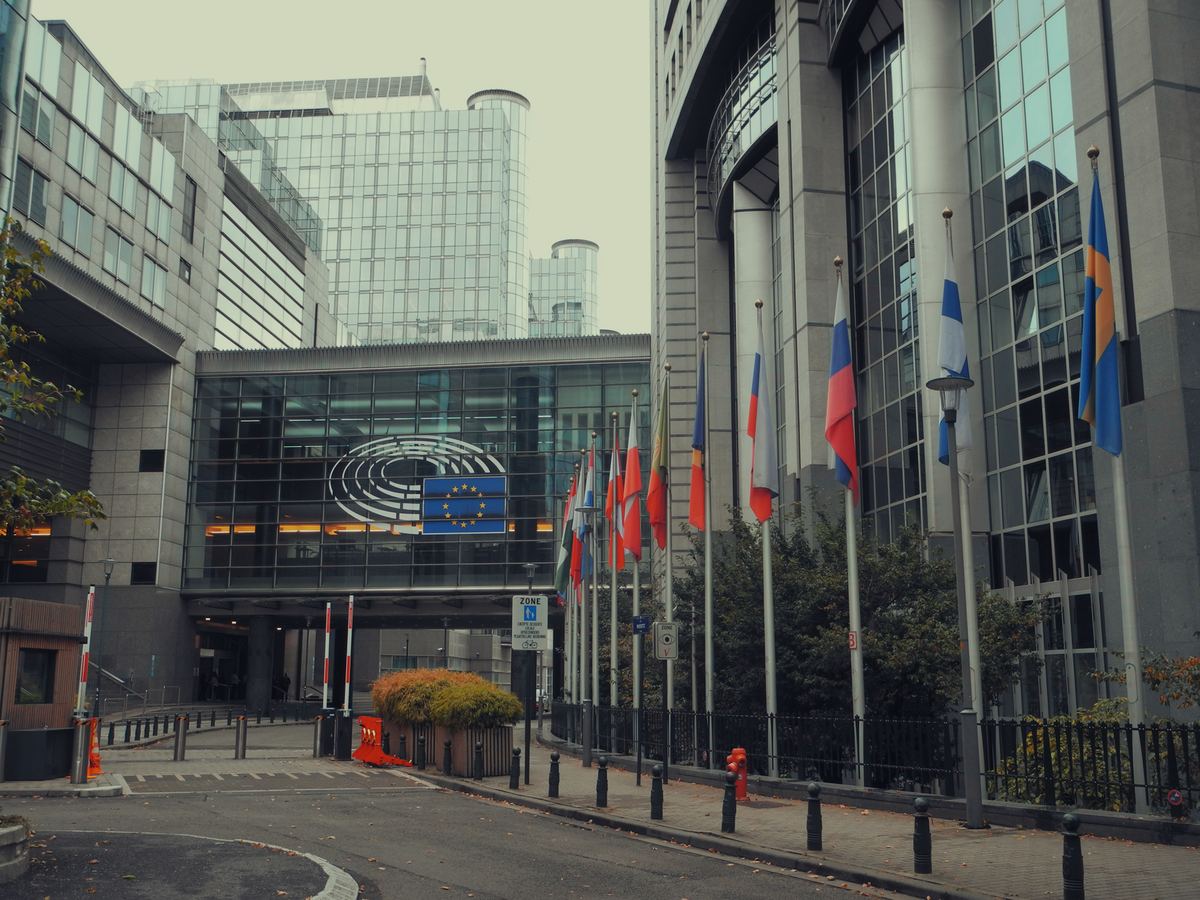
The European Union is India's most important organic market, and it has the most detailed import rules. Two of them decide most outcomes: whether your product falls inside India's recognition, and whether the consignment has its electronic certificate of inspection before it reaches the port.
Rules checked on 24 September 2026 against the European Commission's pages. EU import rules are changing; confirm the current position before contracting for shipments in 2027.
The EU position for India
- e-COIEvery consignment needs an electronic certificate of inspection in TRACES
- A & FIndia's recognition covers unprocessed plant products and propagating material, grown in India under NPOP
- 31 Dec 2026When third-country recognitions, including India's, were set to expire
- 2036The Commission's December 2025 proposal for the new expiry date
No e-COI, No Release
All organic products imported into the EU must be covered by an electronic certificate of inspection, administered through the EU's TRACES system. The Commission is blunt about it: without an e-COI, the products will not be released from their port of arrival in the EU. For countries recognised as equivalent, as India is, the certificates are issued by the control bodies designated by that country's competent authority — for India, that means your NPOP certification body, with APEDA as the competent authority.
What India's Recognition Covers
India is one of eleven third countries recognised by the EU for equivalence. The recognition is limited: it covers products in category A (unprocessed plant products) and category F (vegetative propagating material and seeds for cultivation), grown in India under NPOP. APEDA describes it the same way — recognition for unprocessed plant products.
| Your product | Route into the EU |
|---|---|
| Unprocessed plant products grown in India — spices, pulses, cereals, tea leaf, fresh produce | India's equivalence recognition, NPOP certification, e-COI from your certification body |
| Seeds and propagating material grown in India | Equivalence recognition (category F) |
| Processed foods, livestock products, aquaculture, feed | Outside India's recognition — needs a control body recognised by the EU for India and that product category |
This is where processed-food exporters get caught. An NPOP certificate for a packaged or processed product does not carry it into the EU under India's recognition. Since 1 January 2025, control bodies certifying outside the EU have to be listed under Commission Implementing Regulation (EU) 2021/1378, for the specific country and product category. Before quoting a processed organic product to an EU buyer, confirm that your certification body is on that list for India and for your category.
Check your own product against the EU rules — or switch the destination to compare markets:
This interactive tool needs JavaScript. The rules it applies are set out in the text of this episode.
The 2026 Expiry and the Proposed Extension
- 28 June 2021The Council authorises the Commission to negotiate organic trade agreements with the recognised countries.
- 1 January 2025Control bodies certifying outside the EU must be listed under Regulation (EU) 2021/1378.
- 16 December 2025The Commission proposes extending third-country recognitions to 2036 (COM(2025) 780).
- 31 December 2026Current expiry date of India's recognition under Article 48(1) of Regulation 2018/848.
- 31 December 2036Proposed new expiry date — not confirmed adopted when checked on 24 September 2026.
Under Article 48(1) of Regulation (EU) 2018/848, the recognition of the eleven equivalent third countries — Argentina, Australia, Canada, Costa Rica, India, Israel, Japan, New Zealand, South Korea, Tunisia and the United States — was set to expire on 31 December 2026. The EU's longer-term route is bilateral trade agreements on organic products, which it has been negotiating with those countries since 2021.
On 16 December 2025 the Commission proposed postponing the expiry to 31 December 2036 (COM(2025) 780), explicitly to avoid disrupting organic trade while those negotiations continue. As at the date these rules were checked, the Commission's organic legislation page did not show the extension as adopted.
What to do with that: for shipments arriving in 2027, confirm with your certification body and your EU importer which basis applies — continued equivalence recognition, or certification by a control body recognised under Regulation 2021/1378. Many certification bodies operating in India hold both, so the practical answer may be the same certification body under a different regime.
Additional Controls
The Commission also designates certain products from certain third countries for additional official controls, and publishes the list with obligations for importing member states and for control bodies. A list applied from 1 January 2025 to 31 December 2025. Check whether your product and origin appear on the current list, because it changes the sampling your consignment will face — see residue testing and rejections.
Checklist for an EU Consignment
EU consignment checklist
- Confirm the product category and the regime it enters under.
- Confirm your EU buyer is set up as the importer in TRACES.
- Get the export TC on TraceNet — the Indian requirement does not go away.
- Have your certification body issue the e-COI in TRACES before the goods arrive.
- Test against the EU's pesticide residue limits, not only the NPOP list.
Official sources: the European Commission's organic trade page and the proposal COM(2025) 780. For the TraceNet side of certificates of inspection, see COI generation on TraceNet. KrushiFlow validates these fields and submits farmer records to the portal in bulk.