The PGS-India crop standard is specific about what is banned and what is allowed. This episode sets out the input rules side by side, the required order of pest management, weed control, and a composting requirement that is often missed.
The short version
- Banned: synthetic fertilisers, synthetic pesticides and herbicides, GMOs, sewage sludge.
- Allowed: natural mined minerals, micronutrients with compost, microbial preparations.
- Pest control follows an order: prevention, then physical and biological, then permitted bio-products.
- Compost aerobically at 55°C to 77°C for at least 5 days.
Banned vs. Allowed, Side by Side
What is banned, what is allowed, and what is conditional, input by input.
| Input category | Status | The actual rule |
|---|---|---|
| Synthetic fertilizers, mineral nitrogen | Banned | Prohibited directly or indirectly, along with chemical hormones and synthetic growth promoters |
| GMO seed, planting material, organisms | Banned | Strictly prohibited — no availability exception, unlike conventional seed |
| Sewage, sludge, human excreta | Banned | Prohibited in any form, including processed products |
| Synthetic herbicides, fungicides, insecticides | Banned | Includes synthetic plant growth regulators and synthetic dyes |
| Mined mineral fertilizers | Allowed | Permitted in their natural composition |
| Micronutrients | Allowed | Where deficiency exists — must be mixed with compost |
| Raw dung / urine products | Conditional | Only after controlled fermentation, never applied raw |
| Microbial preparations | Allowed | Biofertilizers, biodynamic preparations, EM solutions |
| Off-farm purchased inputs | Conditional | Group must evaluate first — unless already NPOP-approved |
If an input is already approved for organic use by an NPOP-accredited certification body, your Local Group does not need to separately re-evaluate it. That shortcut saves a lot of group meeting time.
Pest and Weed Management: The Priority Ladder
Work down the order: prevention first, then physical and biological control, then permitted bio-products.
The standard doesn't just list banned pesticides — it prescribes an order of preference. An inspector checking your pest management is really checking whether you worked down this ladder rather than jumping to the bottom rung:
rotations, resistant
varieties, habitat"] B --> C{"Imminent
threat?"} C -->|"No"| D["Stop here"] C -->|"Yes"| E["2 · Physical and
biological
traps, predators"] E --> F{"Still a
threat?"} F -->|"No"| D F -->|"Yes"| G["3 · Permitted
bio products"] G --> H["Synthetics stay
banned throughout"]
Weed Management
Mulching, mowing, grazing, weeding and heat are allowed; synthetic mulches must be removed after harvest.
Permitted methods are mulching with biodegradable material, mowing, livestock grazing, hand or mechanical weeding, and flame, heat, or electrical means. Plastic or other synthetic mulches are allowed — provided they are removed from the field after harvest. Synthetic herbicides are banned outright, with no threshold or exception.
The Composting Requirement People Miss
Aerobic composting, with the pile held between 131°F and 170°F for at least 5 days.
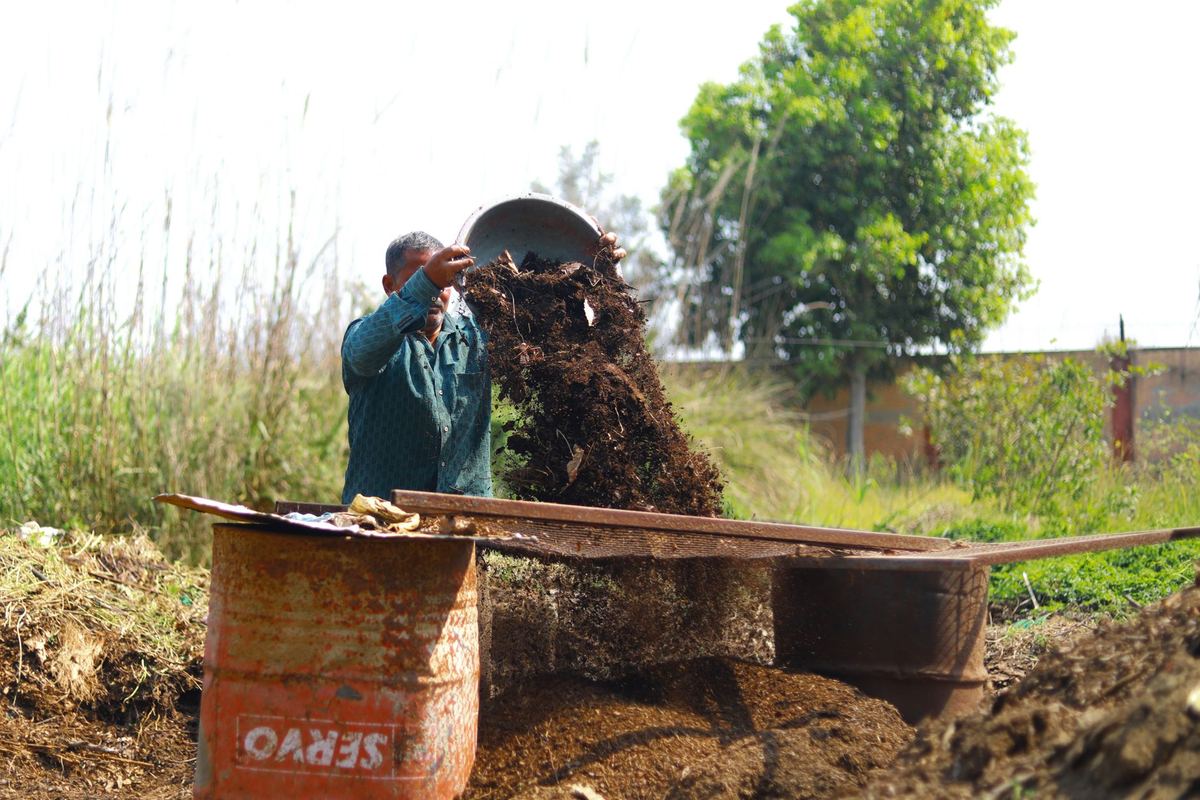
One specific, easy-to-overlook requirement: biodegradable material of plant or animal origin must be composted using an aerobic method, with the pile temperature maintained between 131°F and 170°F (about 55°C to 77°C) for a minimum of 5 days.
This isn't a best-practice suggestion — it's a stated standard requirement, and it's exactly the kind of detail a peer appraiser will ask you to demonstrate. If your group has no temperature record for its compost piles, that's a finding waiting to happen.
For the farm-level requirements that sit underneath all of this — buffer zones, seed sourcing, and crop diversity — see the farm setup rules.
Check yourself
Tap an answer to see whether you are right, and why.
A purchased input is already approved by an NPOP-accredited certification body. Must the group evaluate it again?
- Yes
- No
- Only once a year
That exemption is in the standard.
What must happen to plastic mulch?
- It may stay in the field
- It must be removed after harvest
- It is banned
The standard allows it on that condition.
Remember these things
- Know the banned list.
- Follow the pest control order.
- Remove synthetic mulch after harvest.
- Record compost temperatures.
Clear input rules, followed and recorded, make peer appraisal straightforward. KrushiFlow validates these fields and submits farmer records to the portal in bulk.