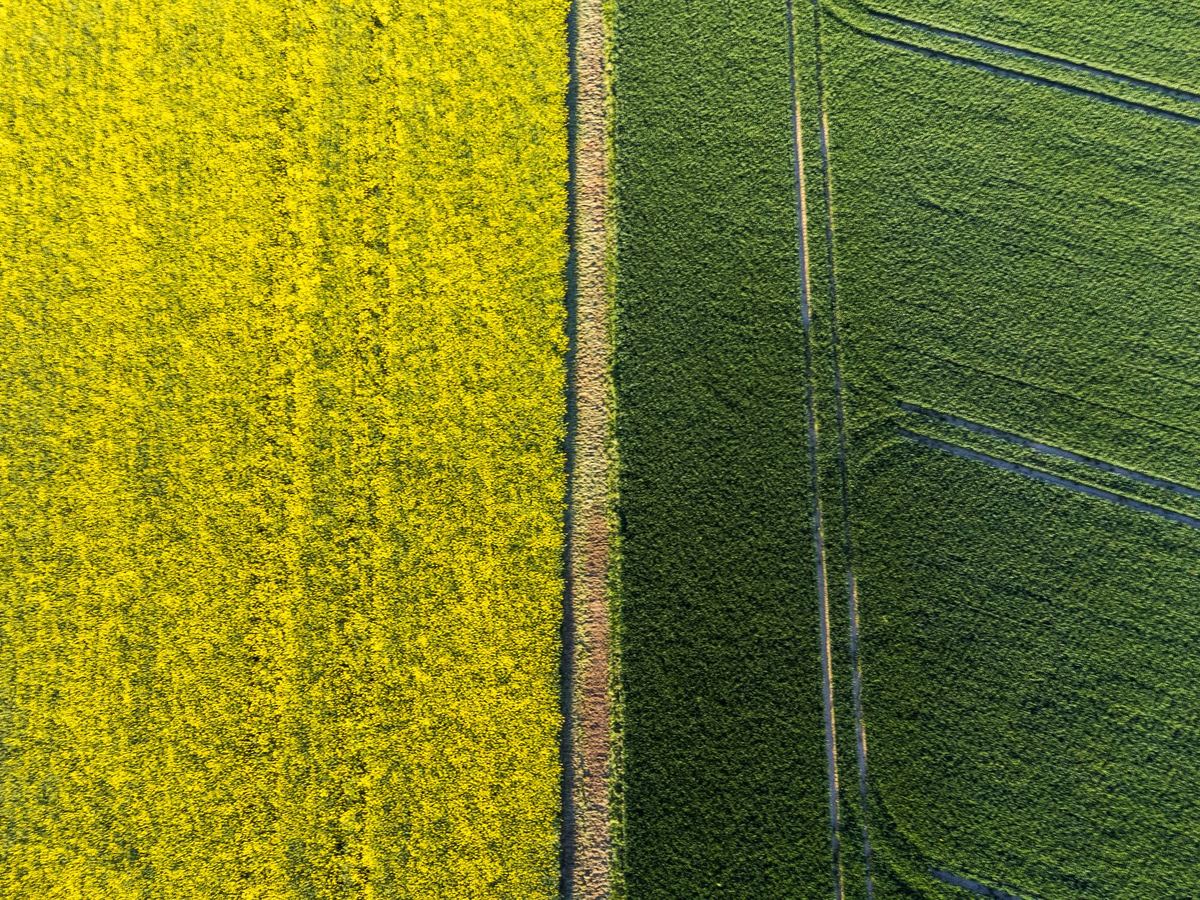
Before conversion periods or input rules come into play, the PGS-India crop standard sets out how the farm itself must be arranged. These are the first things checked at peer appraisal: contamination control, diversity, seeds, soil and water, and livestock integration.
The short version
- Protect the farm from contamination: bunds, channels, buffer zones, separate storage.
- Avoid monocropping; use mixed cropping, intercropping and rotation.
- Certified organic seed first; untreated conventional only with documented non-availability.
- No forest clearing; keep biomass burning to a minimum.
The Four Requirement Areas at a Glance
Contamination control, diversity, seeds and soil and water, with what an appraiser looks for in each.
| Area | What the standard requires | What an appraiser looks for |
|---|---|---|
| Contamination control | Raised bunds, escape channels, buffer zones, separate storage, tool cleaning | Physical separation from neighbouring non-organic fields |
| Diversity | Mixed cropping, intercropping, crop rotations; monocropping avoided | A rotation plan that makes pest management possible without synthetics |
| Seeds & planting material | Certified organic; untreated conventional only if non-availability is documented | Purchase records, and documentation of non-availability |
| Soil & water | No forest clearing, minimal biomass burning, erosion and pollution prevention | Verified on site, not from paperwork |
Contamination Control and Buffer Zones
Raised bunds, escape channels, buffer zones, separate storage and clean tools; avoid parallel production.
The standard requires adequate measures to prevent contamination through water, air drift, or mixing — specifically: raised bunds and escape channels to stop runoff from non-organic fields, buffer zones between organic and non-organic farms, separate storage in time and space for both inputs and produce, and cleaning of machines and tools before use on the organic farm.
Where a farm can't convert its entire holding at once (split production), organic and non-organic parts must be clearly and continuously separate. Growing the same crop in both organic and non-organic sections at once — parallel production — needs to be avoided, because it makes the two harvests impossible to tell apart at inspection.
Seeds: The Decision Path
Certified organic seed; untreated conventional seed only when non-availability is documented; never GMO.
All seeds and planting material are required to be certified organic. The exception is narrow, and the burden of proof sits with the Local Group:
available?"} B -->|"Yes"| C["Use certified
organic seed"] B -->|"No"| D{"Non-availability
documented?"} D -->|"Yes"| E["Untreated
conventional
permitted"] D -->|"No"| F["Not compliant
document first"] A --> G["GMO banned
no exception"]
Diversity Requirements
Mixed cropping, intercropping, rotations, cover crops and multi-layered farming.
Monocropping works against the standard's intent. Farms are expected to maintain sufficient diversity through mixed cropping, intercropping, and crop rotations, with cover crops and multi-layered farming as effective tools. This is tied directly to pest and soil-fertility management — which is why an inspector checking crop diversity is really checking whether your pest-management plan can work without synthetic inputs.
Soil and Water Conservation
No forest clearing, minimal burning, and measures against erosion, salinity and water pollution.
Clearing or destruction of forest is prohibited outright, and burning of straw or biomass must be restricted to a minimum. Beyond that, the standard requires general measures to prevent erosion, soil salination, excessive or improper water use, and pollution of ground or surface water.
Livestock Integration
Livestock is integrated with crops, so dung and urine support soil fertility.
Where livestock is part of the operation, the standard expects it to be integrated with crop production rather than run as a separate enterprise — mainly because the continuous availability of dung and urine is treated as a normal part of soil fertility management on an organic farm.
Livestock carries its own conversion periods and feed rules, separate from crop conversion — covered in the next chapter of this guide. For the input rules that apply to the crops themselves, see what's banned and allowed.
Check yourself
Tap an answer to see whether you are right, and why.
What is parallel production?
- Growing two different crops
- Growing the same crop in organic and non-organic parts at once
- Two harvests a year
It must be avoided.
When may untreated conventional seed be used?
- Always
- When non-availability of organic seed is documented
- Never
The Local Group must establish non-availability.
Remember these things
- Separate the farm from contamination.
- Keep crops diverse.
- Organic seed first.
- Protect soil and water.
A farm arranged to these rules is ready for its first appraisal. KrushiFlow validates these fields and submits farmer records to the portal in bulk.