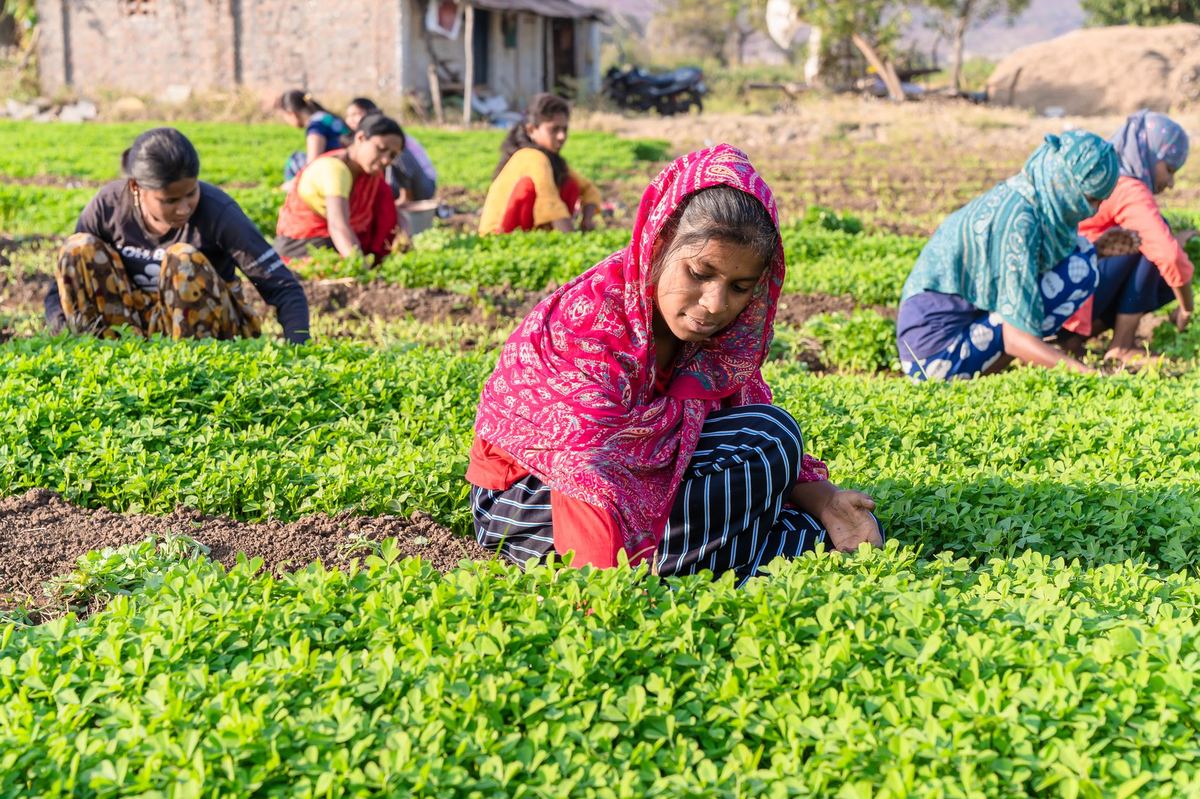
Peer appraisal is how a PGS-India group certifies itself: members inspect each other's farms, and the group decides from what they find. In a PKVY cluster, the implementing agency helps groups run it well. This episode sets out who appraises, when, what is checked, and the common problems.
The short version
- Members appraise each other within their own group.
- At least 3 peer appraisers for each inspection, and no reciprocal reviews.
- Annual crops: 15 days after sowing to 15 days before harvest.
- Record on Format-9; summary sheet at least 7 days before harvest.
Who Appraises Whom
Members of the same group appraise each other; the appraisers' own farms are appraised by another team.
Within the group
Farmers appraise fellow members of their own Local Group, who know the land and the season.
At least 3 appraisers
A group needs at least 3 peer appraisers (3 in a group of 5). There is no upper limit.
At least 3 per inspection
The certification steps (§5.1) require at least 3 peer appraisers per inspection; §4.2 mentions teams of two. Teams of three meet both.
No self-appraisal
The appraisers' own farms are appraised by another team.
Including a consumer's representative in the appraisal team adds credibility, and the guidelines encourage it.
When and What to Check
Appraise annual crops between 15 days after sowing and 15 days before harvest; check fields, stores and records.
| Crop | Appraisal window |
|---|---|
| Annual crops | From 15 days after sowing to 15 days before harvest |
| Plantation crops | Two appraisals: during flowering, and six months later |
| For renewal | At least one appraisal a year involving all farmers |
- Buffer zones and risks of drift from neighbouring farms.
- Inputs in use and in storage, with bills for anything bought.
- Seed source, and whether untreated seed was approved by the group.
- Farm records: crops, sowing dates, and inputs used.
From Worksheets to Decision
Findings go on Format-9, the group decides, and the summary sheet reaches the portal at least 7 days before harvest.
- Fill Format-9 in the field.Signed by the appraisers and the farmer.
- The group decides.Each farmer's status, PGS-Organic or PGS-Green, and any non-compliance.
- Upload the summary sheet.At least 7 days before harvest.
- The RC decides.Within 30 days. A returned decision must be resubmitted within 15 days.
Common Problems and Fixes
Incomplete forms, language difficulty, scattered farms and uneven judgement; most are solved by training and planning.
| Problem | Fix |
|---|---|
| Blank sections on Format-9 | Check forms in the field before leaving the farm |
| Standards hard to follow | The RC must give groups the standards and manual in the local language |
| Farms far apart | Plan visits by village, and start soon after sowing |
| Different appraisers judge differently | Train appraisers together, and use the non-compliance list on Format-9 |
A group with no peer appraisal summary sheet for two seasons or 12 months is suspended, and revival restarts it at PGS-Green-1.
Illustrative workload. At about 30 seconds to check each field on a farmer's worksheet, a 300-farmer cluster takes about 2.5 hours, every season.
Check yourself
Tap an answer to see whether you are right, and why.
Who appraises a PGS group's farms?
- Farmers from another group
- Fellow members of the same group
- The implementing agency
Members appraise each other; the appraisers' own farms are appraised by another team.
How many peer appraisers should each inspection have?
- 1
- 2
- At least 3
§5.1 sets at least 3; §4.2 mentions two-member teams, so teams of three meet both.
Remember these things
- Members appraise each other.
- At least 3 appraisers per inspection; no reciprocal reviews.
- Keep inside the crop window.
- Summary sheet 7 days before harvest.
A well-run appraisal is the strongest part of a group's certification. KrushiFlow validates these fields and submits farmer records to the portal in bulk.