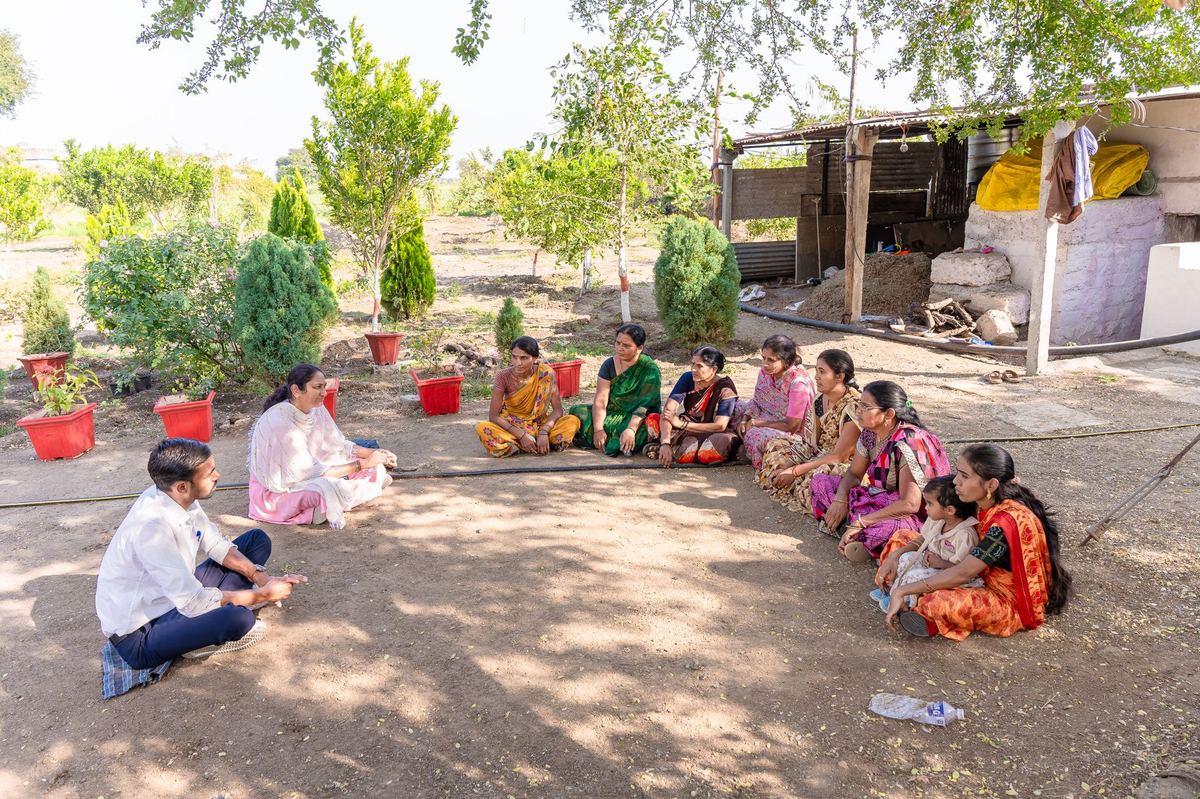
PGS-India, the Participatory Guarantee System for India, certifies organic produce through farmers' own peer groups instead of an outside inspector. It runs on a set of principles written into the official guidelines. This episode explains those principles, the different kinds of operator, and why the principles matter in practice.
The short version
- PGS-India is certification by farmers' peer groups, an alternative to third-party NPOP certification.
- Five principles: participation, shared vision, transparency, trust, horizontality.
- Groups, individual producers and processors each follow a different path.
- A Regional Council judges a group against these principles.
The Five Guiding Principles
Participation, shared vision, transparency, trust and horizontality describe how a Local Group must work.
| Principle | What it actually means for a Local Group |
|---|---|
| Participation | Certification decisions are made by the group itself, not handed down by an outside inspector. Every member has a role in verifying every other member's practices. |
| Shared vision | The group operates on a common understanding of what organic farming means and why — not just a compliance checklist. |
| Transparency | All group decisions, inspection findings, and certification outcomes are open to every member, not held by a single office-bearer. |
| Trust | The system runs on the group trusting its members' declarations, backed by peer verification rather than adversarial auditing. |
| Horizontality | No member sits above another in the certification process. Peer appraisal is conducted between equals, not top-down. |
These five are why PGS-India can certify at a fraction of third-party cost: the inspection labour is contributed by the farmers themselves. It also means a group that quietly concentrates all decisions in one office-bearer has stopped being a PGS group in substance, whatever its paperwork says.
Three Different Operator Types, Three Different Paths
Farmers in a group, individual producers, and on-farm and off-farm processors each follow a different certification path.
The guidelines set out separate principles depending on what kind of operator you are. This is the part most first-time applicants get wrong — an individual producer isn't folded into a Local Group's peer-appraisal process the same way a farmer-member is:
applying?"] --> B["Farmer in a
Local Group"] --> F["Group
peer appraisal"] A --> C["Individual
producer"] --> G["Direct RC
certification"] A --> D["On-farm
processing"] --> H["Under group
certification"] A --> E["Off-farm
processing"] --> I["RC registration
+ inspection"]
Large Contiguous and Default Organic Areas
Separate principles apply to large areas that have long been farmed without chemicals.
There's a further, distinct set of guiding principles for converting large contiguous traditional or default organic areas — places effectively farmed organically for years without formal certification — to PGS-India organic status. This ties directly to the conversion-period waiver in our Standards series: it's the same category of farm the Standards document allows to skip conversion entirely, subject to Secretariat approval. See the conversion period rules for how that waiver actually works.
Why This Matters Beyond Theory
The principles are the standard a Regional Council, appeal or complaint measures a group against.
These aren't abstract values — they're the basis on which a Regional Council evaluates whether a Local Group is actually functioning as PGS-India requires, and what an appeal or complaint against a group ultimately gets measured against. If you're setting up a new Local Group, our guide on Local Group registration and farmer entry covers the practical setup steps.
Check yourself
Tap an answer to see whether you are right, and why.
Who makes the certification decision in PGS-India?
- An outside inspector
- The farmers' Local Group, endorsed by the RC
- APEDA
Participation is the first principle.
Which of these is one of the five guiding principles?
- Profit
- Horizontality
- Secrecy
No member sits above another in the process.
Remember these things
- PGS-India is peer-group certification.
- Five principles guide every group.
- Different operators, different paths.
- The principles are what groups are judged by.
Understanding the principles makes every later rule easier to follow. KrushiFlow validates these fields and submits farmer records to the portal in bulk.