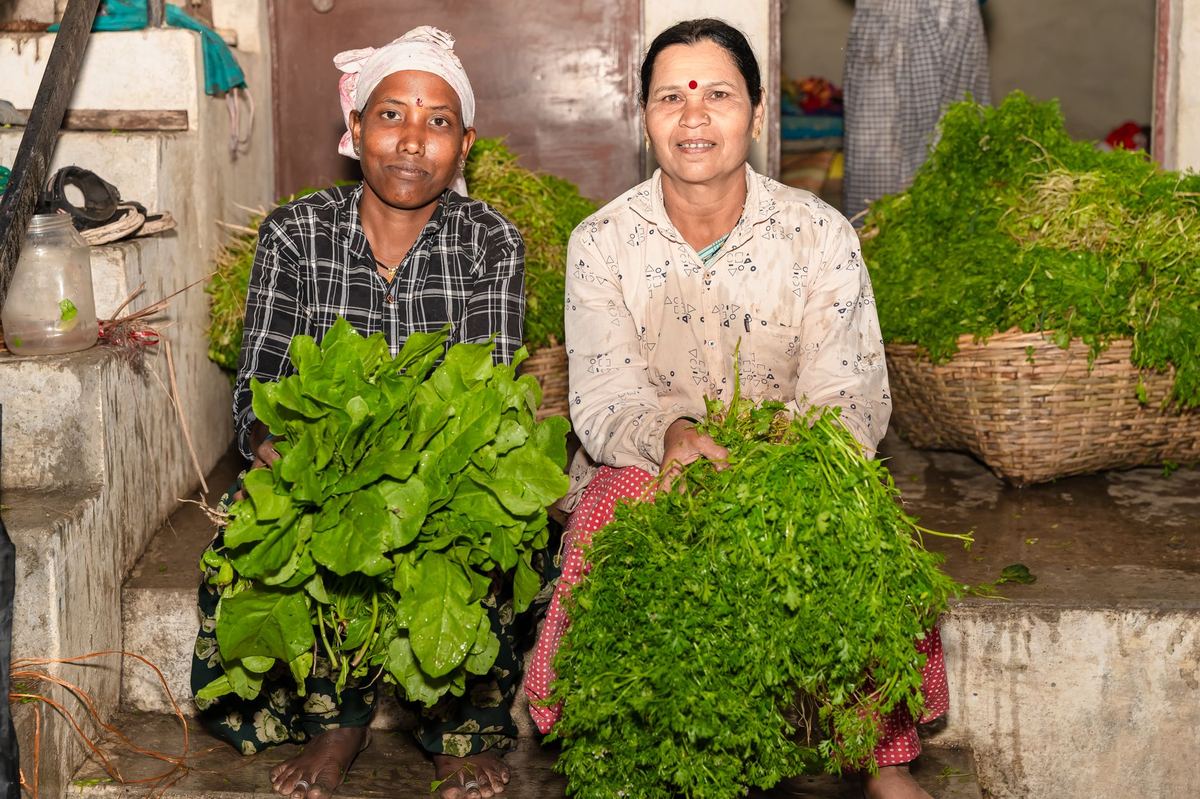
A Farmer Producer Organisation (FPO) is a business owned by its farmer members. Under the 10K FPO scheme it must be registered either as a producer company or as a cooperative society. This part explains the two forms, the services an FPO is expected to run, and why the guidelines put the business plan at the centre.
The short version
- An FPO is owned by its farmer members and registered as a producer company or a cooperative.
- Producer companies come under company law; cooperatives come under the state's Cooperative Societies Act.
- Its purpose is business: buying inputs, renting out machines, adding value and selling together.
- A business plan is expected from the start; the guidelines call it the hallmark of strong growth.
The Two Legal Forms
An FPO under the scheme is either a producer company or a cooperative society; both count equally.
Producer company
- Registered under Part IXA of the Companies Act, 1956, or Part XXIA of the Companies Act, 2013
- Formed and promoted under the scheme by SFAC or NABARD
- Members hold shares; a Board of Directors governs
Cooperative society
- Registered under the state's Cooperative Societies Act, including Mutually Aided or Self-reliant Cooperative Acts
- Formed and promoted under the scheme by NCDC or NABARD
- Bye-laws must follow the state's Cooperative Societies Act
Under company law, a producer company can be formed by ten or more individual producers. Whichever form is chosen, the scheme reimburses registration costs of up to ₹40,000 (see Part 8).
Source: Operational Guidelines 2.0 and 6.1; Addendum item 1
Did you know?The guidelines point to India's dairy cooperatives as the clearest proof of what professional managers can do for a farmers' organisation.
What an FPO Does
The guidelines list eight services, all aimed at lowering members' costs and raising their prices.
Inputs at wholesale rates
Seed, fertiliser, pesticide and other inputs at lower prices.
Machines on hire
Tillers, sprinklers, harvesters and similar equipment on custom hiring.
Value addition
Cleaning, sorting, grading, packing and farm-level processing on user charges.
Higher-income activities
Seed production, bee keeping, mushroom growing and similar work.
Aggregation and logistics
Pooling small lots, storage, transport and loading on shared cost.
Marketing
Selling pooled produce with better bargaining power, and sharing market information.
Source: Operational Guidelines 3.0
Why the Business Plan Matters
The plan decides what the FPO will earn from, and it is checked again and again: for the equity grant and for the CBBO's payments.
"A Business Plan Linked development in both medium and long-term will be the hallmark of strong business growth for FPO." (Operational Guidelines 3.0)
| When | What the plan is used for |
|---|---|
| Before formation | The CBBO prepares a prospective business plan to show the FPO can be viable (4.3) |
| First year | A full business plan is one of the CBBO's milestones (7.4) |
| Equity grant | The FPO must have a business plan and budget for the next 18 months (11.3) |
| Second year | At least 50% of planned business activities should be running (7.4) |
| Fifth year | 100% of the plan executed and three years of revenue growth (7.4) |
For illustration: a tomato-growing FPO might plan an input shop in year one, a grading and packing shed in year two financed by a guaranteed bank loan, and regular supply to a processor by year three.
Produce and People Covered
Any agricultural or allied produce can be the base, including organic and natural farming, with special attention to women and specialised crops.
A produce cluster can be based on crops, horticulture or allied activities, and the guidelines say it also covers organic produce and natural farming (4.1). The Addendum adds that efforts will be made to form women-centric FPOs, and allows specialised FPOs, such as bamboo, agro-forestry, bee keeping, organic or oilseeds, to cover farmers across neighbouring blocks and even two or three districts.
If your FPO plans organic certification, see Starting Organic Certification: PGS-India or NPOP for Your FPO.
Check yourself
Tap an answer to see whether you are right, and why.
Under which law is a producer company registered?
- The state's Cooperative Societies Act
- The Companies Act
- The Societies Registration Act
Producer companies are registered under Part IXA of the 1956 Act or Part XXIA of the 2013 Act.
Which of these is a service an FPO is expected to provide?
- Giving loans to members' relatives
- Renting machines to members on custom hiring
- Collecting land revenue
Custom hiring of machinery is one of the eight services in clause 3.0.
Which agency forms and promotes cooperative FPOs under the scheme?
- SFAC
- NCDC
- APEDA
NCDC handles cooperatives; SFAC handles producer companies; NABARD can do both.
Remember these things
- An FPO is a farmer-owned producer company or cooperative.
- It exists to do business: inputs, machines, value addition and marketing.
- The business plan is checked at every stage.
- Organic, natural farming and women-centric FPOs are all covered.
Part 3 explains who runs the scheme and who an FPO deals with. For FPOs whose members are also certified under PGS-India, KrushiFlow submits farmer records to the PGS-India portal in bulk.