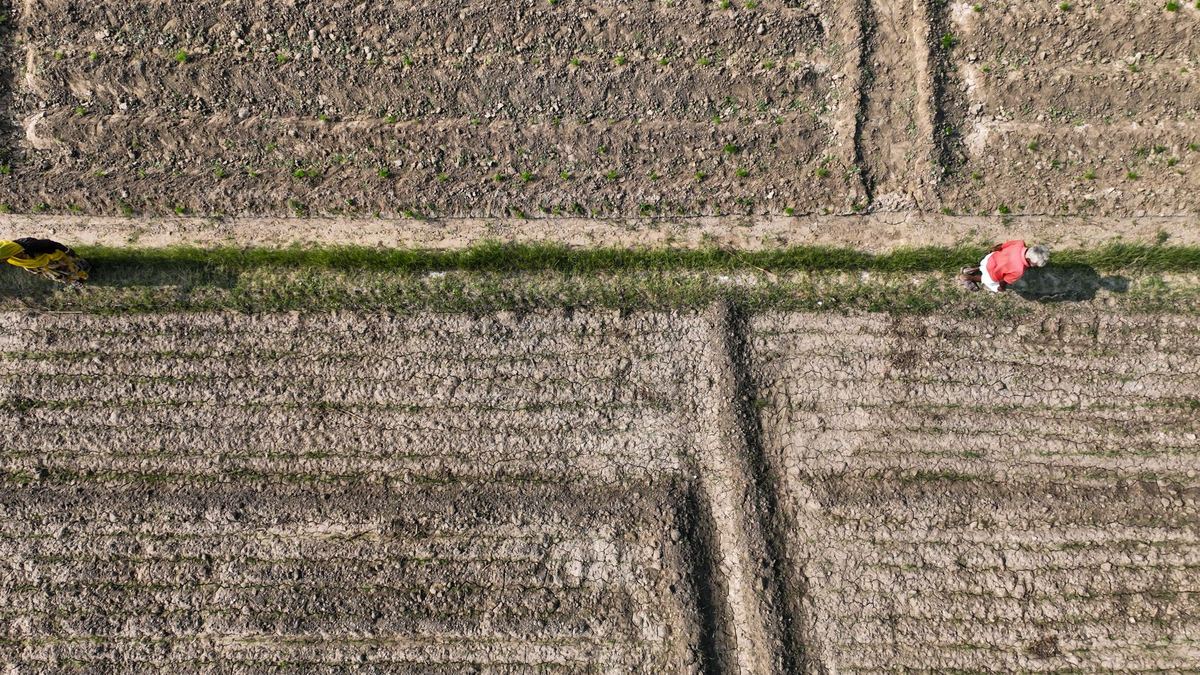
Portal rejections usually start in the field: wrong survey numbers, mismatched names, missing consent. Checking farmers at village level before entry prevents most of them. These are the five pre-portal steps.
The short version
- Check eligibility in the field: cultivating land, Aadhaar, bank account.
- Match the land-record name to Aadhaar before collecting anything else.
- Get signed consent for registration.
- Keep members' land close together within the target Gram Panchayats.
Setting Up the NMNF Farmer Eligibility Criteria and Identification
Confirm each farmer cultivates land, has Aadhaar and a linked bank account, farms inside the cluster's area, and is not double-claiming under PKVY or MOVCDNER.
Identifying eligible farmers is the first step in group formation. The National Mission on Natural Farming (NMNF) requires contiguous land blocks where possible to reduce cross-contamination from synthetic inputs.
Field staff must evaluate each applicant using standardized criteria before adding them to a cluster list:
- Confirm the farmer actively cultivates land and practices or agrees to adopt natural farming techniques.
- Check that the farmer possesses a valid Aadhaar card and an active bank account linked to Aadhaar.
- Verify that the land parcel falls within the designated Gram Panchayat boundary chosen for the cluster.
- Ensure the farmer is not simultaneously claiming duplicate input support for the same land under PKVY or Mission Organic Value Chain Development for North Eastern Region (MOVCDNER).
Keep member land contiguous, or as close together as possible within the target Gram Panchayats — it makes field management and inspection workable.
Conducting the NMNF Pre-Registration Steps at the Village Level
Collect land records, check the name against Aadhaar, get signed consent and record the exact location.
Once you select potential members, field officers must collect core demographic and agricultural records. Missing survey numbers or incorrect land area values are the leading causes of data mismatch errors on government portals.
Execute these manual steps during field visits:
- Collect copies of the official land record document, such as Khasra, Khatauni, or 7/12 extract.
- Verify that the applicant's name on the land record matches the name on their Aadhaar card.
- Obtain a signed farmer consent form authorizing your agency to register their land for natural farming certification.
- Record exact physical location details, including Gram Panchayat, block, district, and pincode.
Checking each village spelling and land record manually takes about three minutes per farmer. For a 20-farmer group that requires one hour of work. For 500 farmers across ten clusters, field officers spend over 25 hours on verification, which repeats during annual updates.
After completing field collection, field officers should refer to the NMNF Cluster Registration: Portal Steps for Agencies guide to upload verified groups.
Defining Cluster Boundaries and Validating Group Members
Map the cluster's total area, hold the first group meeting, inspect sample plots and record signed minutes.
An NMNF cluster must form a cohesive geographical unit. Field staff must validate the outer boundary of the cluster to ensure field inspectors can efficiently audit group operations.
Follow this checklist as your NMNF cluster formation manual for physical validation:
- Map the total contiguous area covered by all participating members in hectares.
- Confirm that total cluster area satisfies minimum scheme requirements for group formation.
- Hold an initial group meeting with members to select a Lead Farmer and form the local managing committee.
- Conduct physical land inspection on sample plots to ensure no prohibited chemical inputs are stored or used.
- Document the meeting minutes with member signatures to confirm collective agreement.
Completing these physical verification steps reduces data corrections after portal submission. Proper field preparation allows implementing agencies, Regional Councils, and the National Centre for Organic and Natural Farming (NCOF) to approve clusters efficiently.
Check yourself
Tap an answer to see whether you are right, and why.
What should you check before collecting other documents?
- Crop yields
- That the land-record name matches Aadhaar
- The bank balance
Name mismatches are the commonest cause of portal rejection.
Remember these things
- Verify eligibility on site.
- Match names across land record and Aadhaar.
- Signed consent and meeting minutes on file.
Clean field data is what makes portal entry quick and rejection-free. KrushiFlow validates these fields and submits farmer records to the portal in bulk.