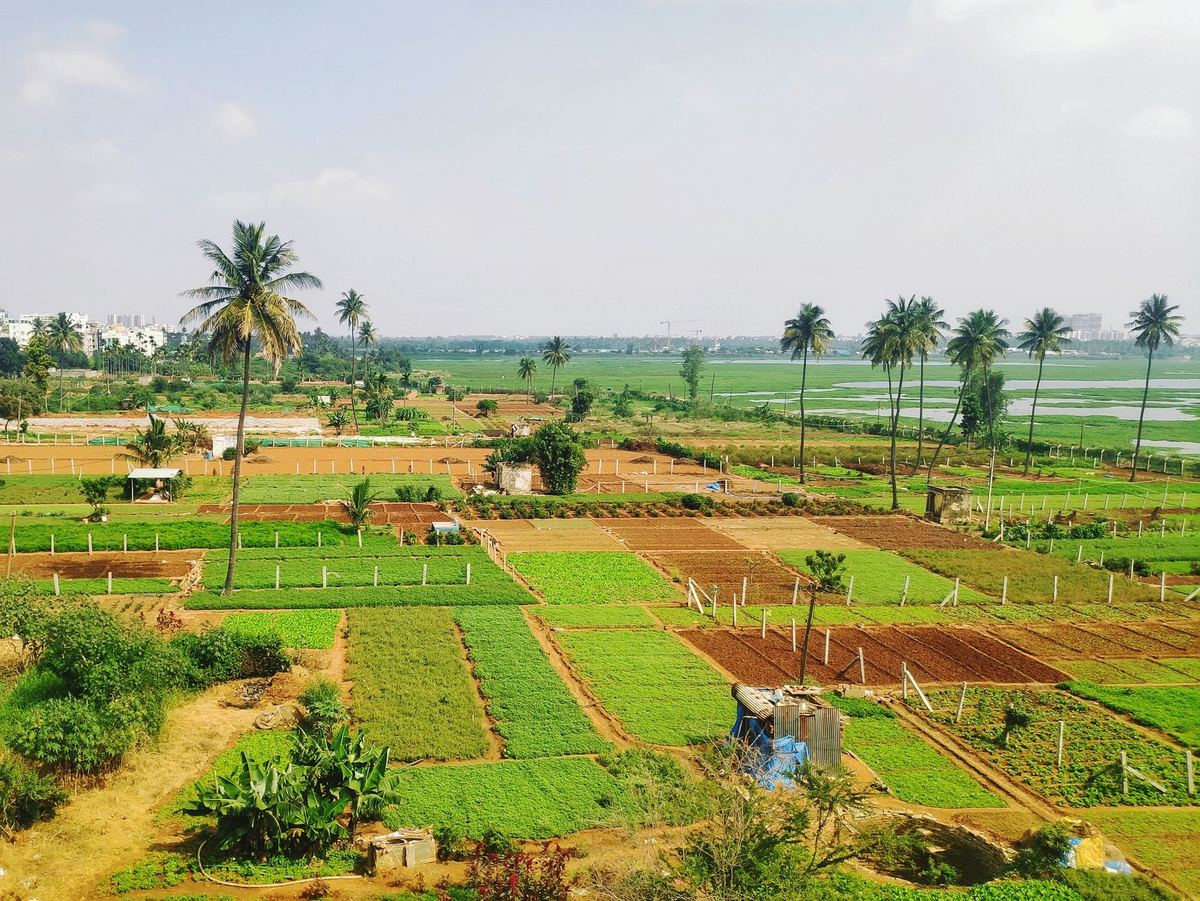
Every FPO under the scheme starts with a produce cluster: an area where farmers grow similar produce or run similar activities. This part explains how the cluster is chosen, the feasibility study the CBBO must carry out, and the areas the scheme puts first.
The short version
- A produce cluster is an area growing similar produce, and it can include organic produce and natural farming.
- The implementing agency proposes the cluster and the produce; the District Level Monitoring Committee approves it.
- The CBBO's feasibility study has two parts: a baseline survey and a prospective business plan.
- Priority areas: aspirational districts (at least 1,500 FPOs), tribal areas and the North-East.
What a Produce Cluster Is
A geographical area where similar agricultural or allied produce is grown, so that farmers gain from producing and selling together.
The guidelines define a produce cluster as an area where agricultural and allied produce of a similar nature is grown, so that an FPO can gain economies of scale in production and marketing. It also covers organic produce and natural farming (4.1).
Where a district has a declared One District One Product (ODOP) crop, FPO formation also focuses on it, with processing, branding, marketing and export in mind. A district can have more than one cluster for the same product, and a cluster can cross district boundaries. Even so, each FPO should keep other products and services, so that members have work with it through the year (4.7).
Did you know?Before the Addendum, the plan was an average of two FPOs in each of about 5,000 potential blocks; the Addendum now aims to cover every block in the country.
Who Chooses the Cluster
After the Addendum, the implementing agency identifies the cluster and the produce, and the District committee decides on technical feasibility.
Original rule (2020)
- Cluster identified with inputs from the District committee, the State committee, ministries, the implementing agencies and CBBOs
Current rule (Addendum)
- The implementing agency identifies the cluster, blocks and produce or activity
- It presents them to the District Level Monitoring Committee (D-MC)
- The D-MC approves the produce, based on technical feasibility
Above this, the national committee allocates clusters, districts and states to implementing agencies (14.1.2), and the State Level Consultative Committee asks state departments to help identify clusters and mobilise farmers (14.2.2).
Source: Operational Guidelines 4.2, 14.1.2, 14.2.2 and 14.3.2; Addendum item 2
The Feasibility Study
Before an FPO is formed, the CBBO studies the cluster and writes a business plan that shows the FPO can pay its way.
- Baseline survey. Find the similarity of produce and of social and cultural life, the gaps, and the infrastructure and services the value chain needs, including post-harvest handling and marketing.
- Map the farmers. Record the current state of farming and identify small, marginal and landless farmers to bring together, and the minimum area for useful work.
- Prospective business plan. Make the case that an economically sustainable FPO can be formed here.
- Report. In the first six months, the implementing agency judges the CBBO on this survey, its report and the aggregation work started.
Source: Operational Guidelines 4.3 and 7.4(c)(i)
Areas the Scheme Puts First
Aspirational districts, tribal areas, the North-East and women-centric FPOs get priority, and every block is meant to be covered.
Aspirational districts
At least 15% of FPOs (1,500) in aspirational districts, with at least one in every block there.
Tribal areas
Priority for FPOs in notified tribal areas, especially for forest and minor forest produce.
North-East
Support through DoNER and the North Eastern Council, and extra help from the NPMA.
Women-centric FPOs
Added by the Addendum: efforts to form FPOs centred on women farmers.
Every block
The Addendum aims to cover all blocks; specialised FPOs may span neighbouring blocks or 2 to 3 districts, kept as compact as possible.
Source: Operational Guidelines 4.8; Addendum items 3 and 4
Check yourself
Tap an answer to see whether you are right, and why.
Who approves the produce for a new FPO after the Addendum?
- The CBBO alone
- The District Level Monitoring Committee
- The bank
The implementing agency proposes; the D-MC decides on technical feasibility.
What are the two parts of the CBBO's feasibility study?
- A loan application and a land survey
- A baseline survey and a prospective business plan
- An audit and a share register
Clause 4.3 lists the diagnostic baseline survey and the prospective business plan.
How many FPOs are to be formed in aspirational districts?
- At least 500
- At least 1,500
- At least 5,000
At least 15% of 10,000, that is 1,500, with at least one FPO in each block there.
Remember these things
- A cluster is an area with similar produce; organic and natural farming count.
- The IA proposes and the D-MC approves on technical feasibility.
- The CBBO does a baseline survey and a prospective business plan.
- Aspirational, tribal and North-East areas come first.
Part 5 explains the membership rules: how many farmers, and who should be included. For FPOs whose members are also certified under PGS-India, KrushiFlow submits farmer records to the PGS-India portal in bulk.